
In recent years, the word “recession” has been all over the news, headlines, social media, and even family WhatsApp groups. But despite hearing the term often, many people still ask, “What is a recession?” Whether you’re a student, a job-seeker, a business owner, or a working professional, understanding this concept is crucial, especially if you’re living in a fast-growing and economically diverse country like India.
In this detailed guide, we’ll break down the recession definition, explore what causes it, how it impacts your everyday life, and how India can manage it better. So let’s dive deep—but in the simplest way possible.
1. What is a Recession?
To put it very simply, a recession is a period when a country’s economy slows down significantly. During this time, there is less money being spent, fewer jobs are available, and businesses don’t grow as much as they usually do.
The technical recession definition says it occurs when a country’s Gross Domestic Product (GDP)—which is the total value of goods and services produced—shrinks for two consecutive quarters (i.e., six months). But for the common man, it simply means that things get tougher: prices may rise, income might stay the same or fall, and jobs become harder to find.
2. Understanding the Indian Economy in Simple Terms
Before we get deeper into recessions, let’s first understand how the Indian economy works. India is a mixed economy, which means it includes both private businesses and government-run enterprises. Agriculture, industry, and services are the three major sectors.
India has a large population, and consumer spending plays a big role in keeping the economy growing. When people buy more things—like food, clothes, vehicles, or even smartphones—businesses grow, jobs are created, and the economy becomes stronger.
But when people start spending less—because they fear losing their jobs or don’t have enough income—that’s when the risk of a recession increases.
3. What Causes a Recession?
Recessions can happen due to many reasons, and often it’s a combination of several factors. Some of the main causes include:
a. Drop in Consumer Spending
When people start saving more and spending less, businesses make fewer sales. This drop in demand leads to layoffs and even business closures.
b. High Inflation
Inflation is when the prices of goods and services increase over time. When inflation gets too high, people can’t afford to buy as much as they used to, and this slows down the economy.
c. Sudden Global Events
Things like wars, pandemics (like COVID-19), or international conflicts can create uncertainty and disrupt trade, causing recessions in many countries, including India.
d. Rising Interest Rates
When the Reserve Bank of India (RBI) increases interest rates to control inflation, it also becomes more expensive for businesses and people to borrow money. This can reduce investments and spending.
e. Unemployment
When companies are not doing well, they lay off workers, which increases unemployment. And when people don’t have jobs, they spend less, causing a vicious cycle.
4. What Does a Recession Feel Like in India?
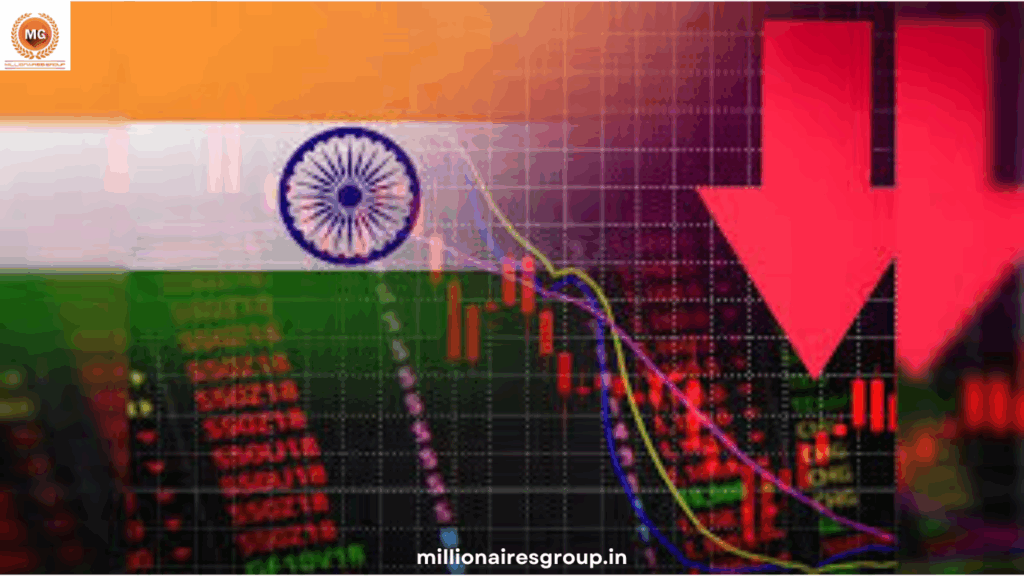
An economic recession in India may not always be visible in big headlines, but people feel it in their daily lives. Here’s how:
Jobs become scarce. Fresh graduates struggle to find work, and experienced professionals may face pay cuts or layoffs.
Small businesses suffer. Shops, kirana stores, and vendors see fewer customers and lower profits.
Prices stay high, incomes don’t rise. People find it harder to save money or afford the same lifestyle they had earlier.
Government revenues fall. With less tax collected, public spending on development projects may be reduced.
5. Historical Recessions That Impacted India
India has not experienced too many full-blown economic recessions, but it has seen slowdowns that affected growth:
a. The Global Financial Crisis of 2008
Though India was not the center of this crisis, it faced the heat. Exports declined, stock markets crashed, and job markets froze for months.
b. COVID-19 Pandemic (2020–2021)
This was one of the biggest economic shocks in recent Indian history. With lockdowns, travel bans, and business closures, India’s GDP shrank by 24% in the first quarter of 2020.
These events remind us that even if a recession starts in another part of the world, India is not immune to its impact.
6. How Does the Government Try to Prevent or Control Recessions?
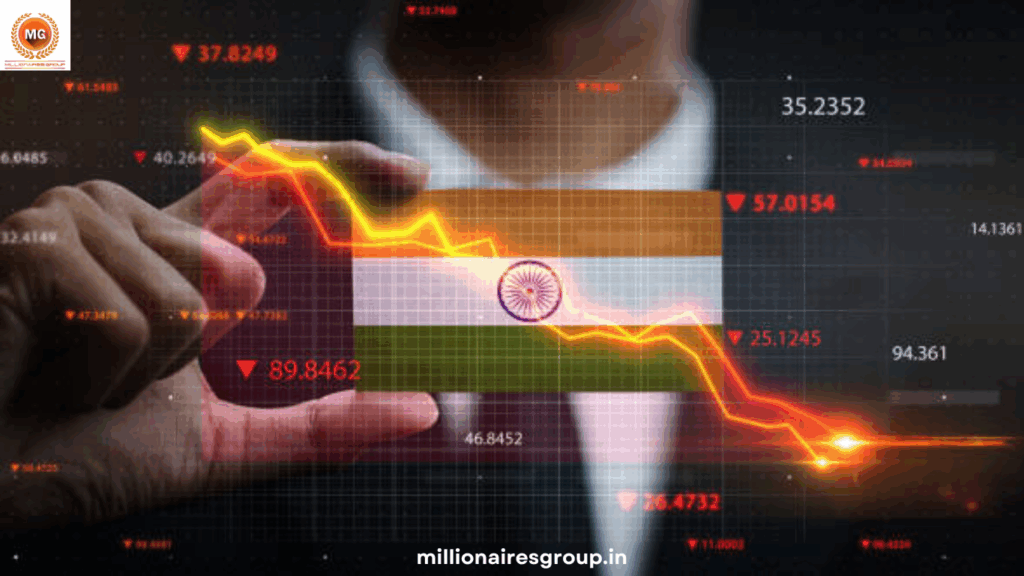
When a recession starts or looks likely, the Indian government and the RBI take steps to bring the economy back on track. Some of these steps include:
Lowering interest rates will make borrowing cheaper and encourage spending.
Offering subsidies and financial help to small businesses and farmers.
Increasing government spending on infrastructure to create jobs and boost demand.
Cutting taxes to leave more money in people’s hands.
These steps are like medicine for a sick economy—they help it recover slowly and steadily.
7. How Does a Recession Affect the Common Man in India?
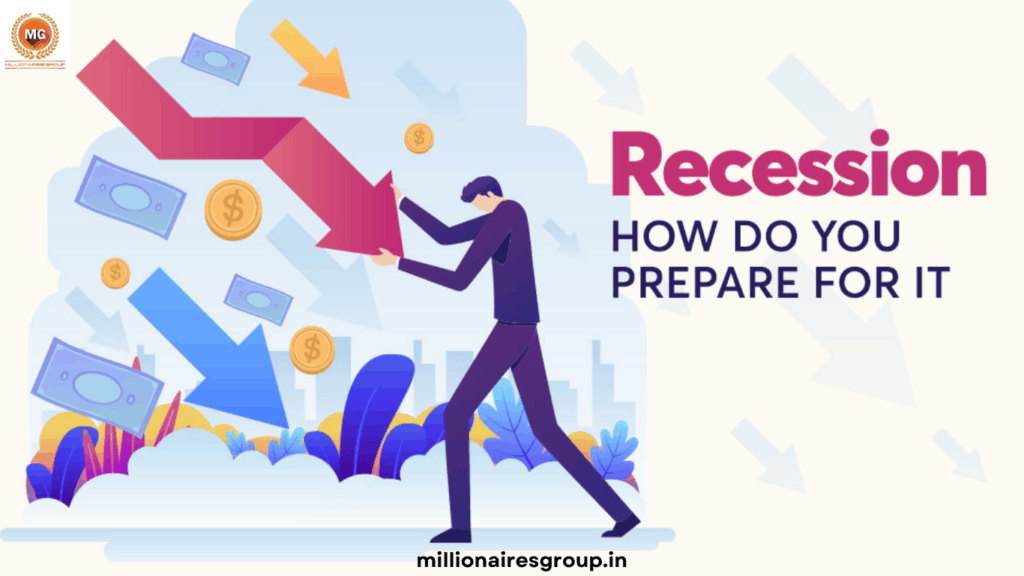
You may think recession is something only economists or businesspeople worry about. But the truth is, every Indian is affected in some way. Here’s how:
Salaried Employees: They might face salary freezes, fewer bonuses, or even job loss.
Students and Freshers: Campus placements drop, and competition increases for fewer jobs.
Small Business Owners: They may find it hard to get loans or attract customers.
Farmers: If demand falls, crop prices may fall, and incomes can shrink.
Homemakers: Budgeting becomes tougher with rising prices and fixed incomes.
Even if you’re not directly involved in business, a recession can change your life in unexpected ways.

8. Can India Enter a Recession?
Yes, while India has shown resilience in the past, it is still vulnerable to economic slowdowns. Factors such as:
High dependence on oil imports
A large informal workforce
Global economic connections
Fluctuations in monsoon and agricultural output
… means that India can’t ignore global or domestic threats to its economy. However, India also has strong domestic demand, a young population, and diverse sectors, which give it a unique edge in recovery.
9. Tips for Individuals to Prepare for a Recession in India
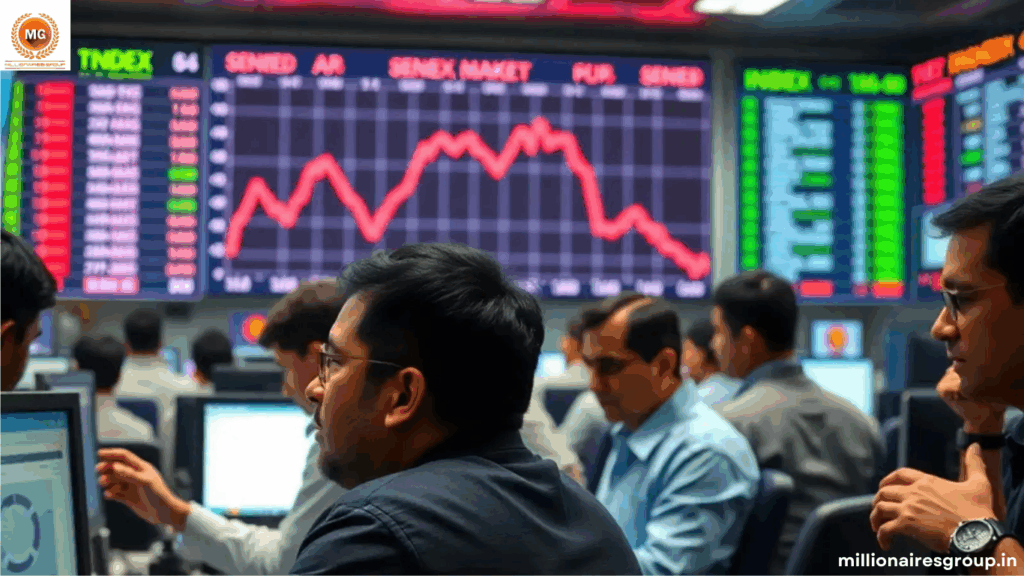
While you can’t control the economy, you can take steps to prepare yourself financially and emotionally. Here are a few tips:
Build an emergency fund that can support 6–12 months of your expenses.
Avoid unnecessary loans or EMIs.
Upskill and stay updated, so you’re valuable in any job market.
Invest wisely, preferably in diversified instruments.
Control lifestyle inflation—don’t increase spending just because income increases.
Preparedness is key to staying secure during uncertain times.

10. How Can India Avoid Future Recessions?
While some causes of recession are beyond any country’s control, India can take several long-term steps to strengthen its economy:
Encouraging manufacturing and exports
Boosting digital and green technologies
Reducing dependency on global imports
Improving education and job creation
Strengthening social security for vulnerable groups
With a strategic and people-first approach, India can not only avoid future recessions but also become more economically resilient.

Conclusion: Recession Doesn’t Mean the End—It’s a Phase
In the simplest of terms, a recession is a temporary phase where the economy goes through a slowdown. While it can bring hardship, it also brings lessons, changes, and new opportunities. Whether you’re a student, employee, or businessperson, understanding what a recession is helps you make better decisions.
India, like any other country, faces risks of economic downturns. But with strong policies, aware citizens, and smart planning, it can bounce back stronger each time.
The more you understand the recession definition and its impact, the better equipped you’ll be to protect yourself and grow—even when times are tough.
FOR A FREE STOCK MARKET SEMINAR VISIT HERE
CALLS @ 9986622277
Disclaimer
The information provided here is for general informational purposes only and should not be construed as financial advice. Investing in the stock market involves inherent risks, and there is no guarantee of profits or protection against losses. Before making any investment decisions, it is essential to conduct thorough research and seek advice from a qualified financial advisor or professional.