
The stock market is often described as the heartbeat of an economy. In India, millions of investors, traders, and institutions rely on stock market indexes to track performance, make informed decisions, and predict trends. These indexes act like a thermometer for the market, providing a clear picture of how sectors, industries, or the overall market are performing.
But what exactly are stock market indices, and why do they matter so much? For anyone looking to invest, trade, or even just understand the Indian economy, learning about the key stock indexes is a must. This article breaks down the most important indices in India, explains their role, and also connects them with global market indices and stock index futures to give you a broader perspective.
What Are Stock Market Indexes?
A stock market index is a benchmark that measures the performance of a group of stocks. These stocks are usually chosen based on certain criteria such as market capitalization, industry representation, or liquidity.
In simple words, if the stock market were a big classroom, then the index would be like the class average score. Instead of tracking every student (stock), you look at the average performance of the top-performing ones.
For example, when you hear that the Sensex has gone up by 500 points or the Nifty 50 has fallen by 1%, it means the average performance of selected stocks within these indexes has changed.

Importance of Stock Market Indices
Stock indexes serve multiple purposes in the financial world:
- Market Performance Indicator – They show whether the market is bullish (rising) or bearish (falling).
- Benchmark for Investors – Mutual funds, portfolio managers, and even retail investors compare their returns with popular indexes like the Nifty 50.
- Sector Representation – Indices represent different industries (banking, IT, pharma, etc.), giving a clear sectoral outlook.
- Basis for Derivatives – Stock index futures and options are derived from these indexes, offering hedging and trading opportunities.
- Global Relevance – Indian indexes are often compared with global market indices like the Dow Jones, S&P 500, or FTSE to assess international trends.
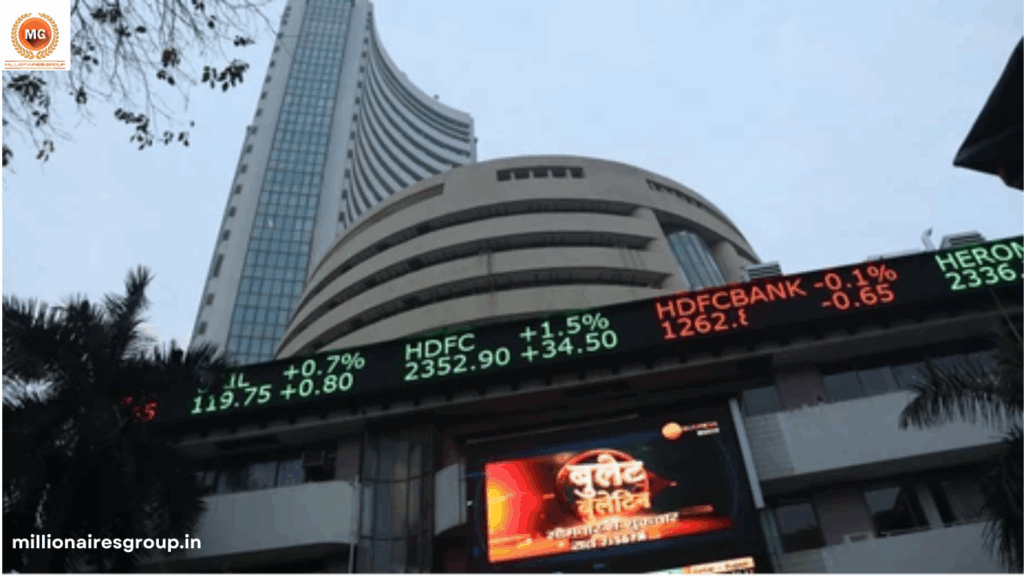
Key Stock Market Indexes in India
India has two primary stock exchanges: BSE (Bombay Stock Exchange) and NSE (National Stock Exchange). Both exchanges have their own flagship indexes along with several sector-specific and thematic indexes.
Let’s look at the most important ones.
1. Sensex (BSE Sensex)
Full Form: Sensitive Index
Launched: 1986
Base Year: 1978–79 (base value: 100)
No. of Stocks: 30
The Sensex is the oldest and most widely tracked stock market index in India. It represents 30 of the largest and most actively traded companies listed on the Bombay Stock Exchange. These companies are leaders in their industries and provide a snapshot of the Indian economy.
Companies included: Reliance Industries, Infosys, TCS, HDFC Bank, ICICI Bank, etc.
When financial news reports say, “The Sensex closed higher by 800 points,” it’s essentially showing how India’s top 30 companies performed on that day.

2. Nifty 50 (NSE Nifty)
Launched: 1996
Base Year: 1995 (base value: 1000)
No. of Stocks: 50
The Nifty 50 is the flagship index of the National Stock Exchange. It represents the top 50 companies from various sectors, making it one of the most diversified stock indexes in India.
It is widely used by domestic and foreign investors as a benchmark for Indian market performance.
Key sectors covered: Financial services, IT, energy, FMCG, telecom, pharma, etc.
3. Bank Nifty (Nifty Bank Index)
Focus: Banking Sector
Includes the most liquid and large-cap banking stocks.
The Bank Nifty reflects the performance of major Indian banks such as HDFC Bank, ICICI Bank, Axis Bank, State Bank of India, and Kotak Mahindra Bank. Since banking is the backbone of the economy, this index is heavily traded, especially in the derivatives segment (stock index futures and options).
4. Nifty Next 50 (Junior Nifty)
This index includes the next 50 companies after the Nifty 50, ranked by market capitalization. These companies are often potential candidates for inclusion in the Nifty 50 in the future.
It gives investors exposure to mid-cap growth opportunities.
5. BSE 500
The BSE 500 is one of the broadest indexes in India, covering around 500 companies listed on the BSE. It represents almost the entire market by capturing large-cap, mid-cap, and small-cap stocks.
6. BSE Midcap & Smallcap Indexes
BSE Midcap Index: Tracks the performance of mid-sized companies.
BSE Smallcap Index: Focuses on smaller, fast-growing businesses.
These indices help investors understand how different company sizes are performing in the market.

7. Sector-Specific Indexes
Both NSE and BSE have sectoral indices that focus on specific industries.
Examples include:
Nifty IT Index – Infosys, TCS, Wipro, HCL Tech.
Nifty Pharma Index – Sun Pharma, Dr. Reddy’s, Cipla.
Nifty FMCG Index – HUL, Nestle, Britannia.
Nifty Energy Index – Reliance, ONGC, NTPC.
These help investors track industries separately and are particularly useful for sectoral investment strategies.
8. India VIX (Volatility Index)
Although not a traditional stock index, the India VIX measures market volatility. Often referred to as the “fear index,” it shows expected market fluctuations in the near future.
A higher VIX indicates higher uncertainty and risk in the market.
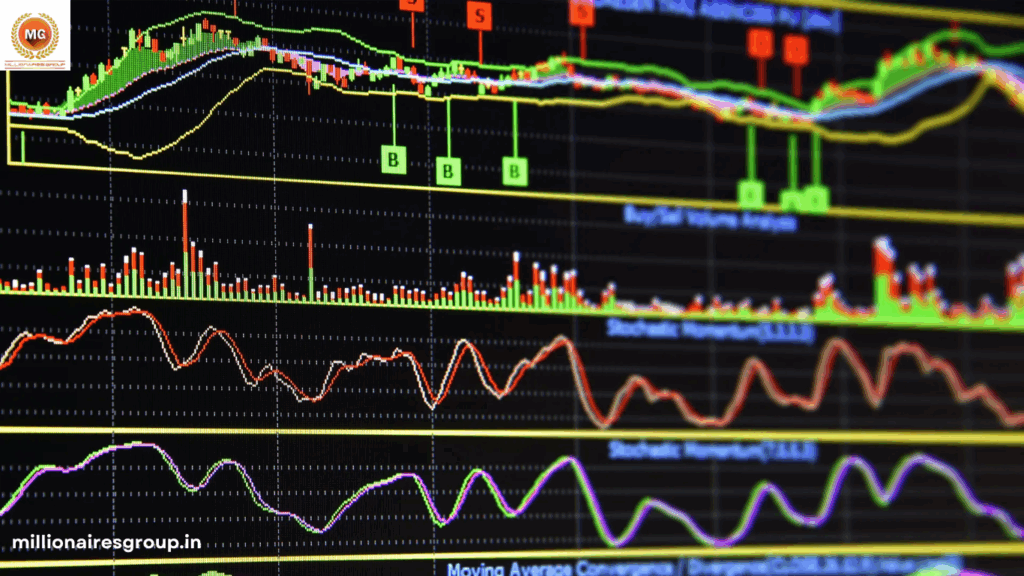
How Indian Stock Indexes Connect with Global Market Indices
Indian stock indexes don’t move in isolation. Global economic trends, geopolitical events, and foreign investment decisions influence them.
Some major global market indices include:
- Dow Jones Industrial Average (DJIA) – US
- S&P 500 – US
- Nasdaq Composite – US
- FTSE 100 – UK
- Nikkei 225 – Japan
- Hang Seng Index – Hong Kong
- Shanghai Composite – China
For example, a sharp fall in the US S&P 500 often leads to negative sentiment in Indian markets as well, causing Nifty and Sensex to fall.
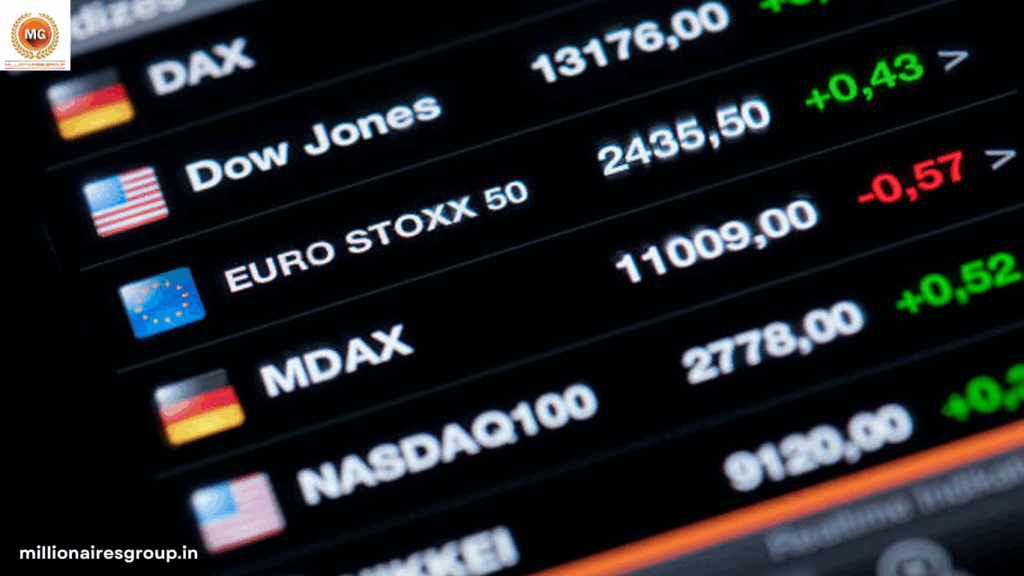
Stock Index Futures and Their Role
Stock index futures are derivative contracts that allow traders to buy or sell an index at a future date and a pre-decided price.
- Hedging Tool: Investors use futures to protect themselves against potential market downturns.
- Speculation: Traders bet on the direction of the index for potential profits.
- Liquidity: Index futures are among the most traded instruments on NSE, especially Nifty and Bank Nifty futures.
Example: If you believe the Nifty 50 will rise in the next month, you can buy Nifty futures today. If your prediction is correct, you make a profit.
Why Investors Should Track Stock Indexes
- Decision Making: Helps decide whether to invest in equity or stay cautious.
- Performance Benchmarking: Compare your portfolio returns with Nifty or Sensex.
- Diversification Insights: Sectoral indexes show where opportunities and risks lie.
- Understanding Global Linkages: Tracking both Indian and global indices gives a big-picture view of financial markets.

Final Thoughts
Stock market indexes are much more than just numbers flashing on TV screens. They are essential tools that reflect the health of the economy, provide guidance for investors, and serve as benchmarks for performance.
For Indian investors, understanding key indices like Sensex, Nifty 50, Bank Nifty, and sectoral indices is crucial. At the same time, staying updated with global market indices and stock index futures helps in making smarter, well-rounded investment decisions.
Whether you are a beginner looking to start your investment journey or an experienced trader, keeping an eye on these indexes can give you a strong advantage in navigating the Indian stock market.
FOR A FREE STOCK MARKET SEMINAR VISIT HERE
CALLS @ 9986622277
Disclaimer
The information provided here is for general informational purposes only and should not be construed as financial advice. Investing in the stock market involves inherent risks, and there is no guarantee of profits or protection against losses. Before making any investment decisions, it is essential to conduct thorough research and seek advice from a qualified financial advisor or professional.