In the world of trading, many beginners focus only on profits—how much they can earn from a trade. But experienced traders know that success is not just about winning trades; it’s about managing risk effectively. This is where the risk–reward ratio becomes one of the most important concepts in trading.
Whether you are learning through a stock market course or searching for a trading institution near me, understanding this concept can make a huge difference in your long-term success.
What is Risk–Reward Ratio?
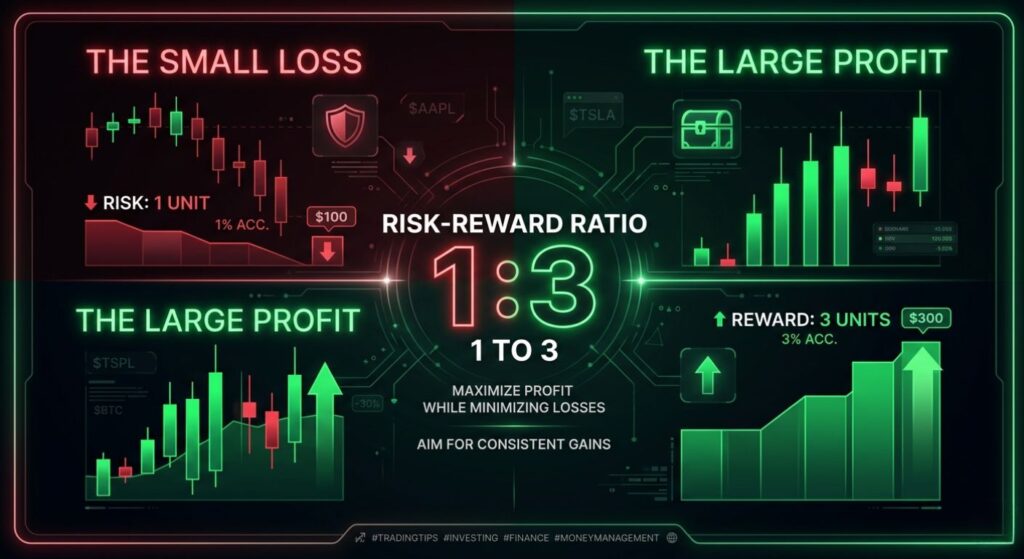
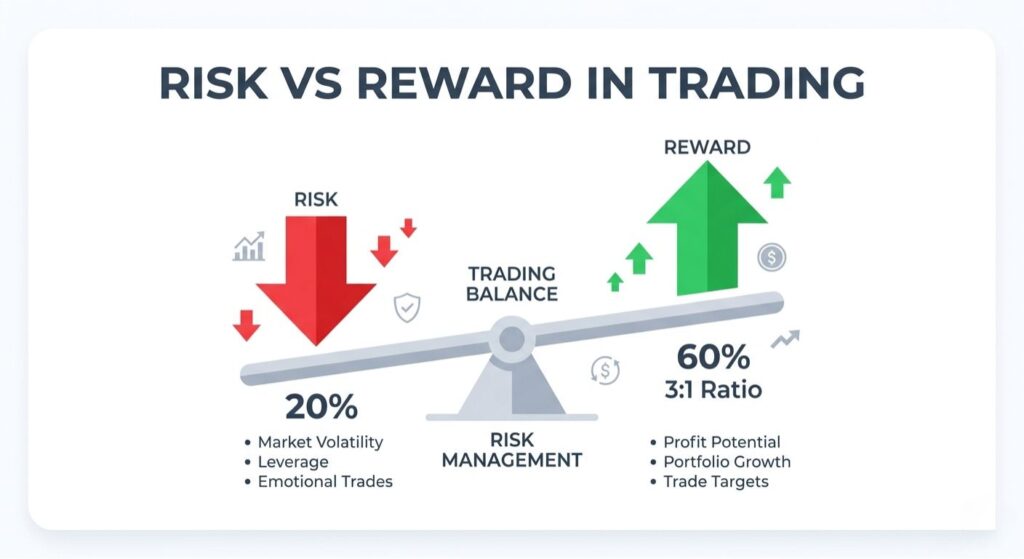
The risk–reward ratio (RRR) measures how much risk you are willing to take for a potential profit.
Risk = The amount you can lose
Reward = The amount you expect to gain
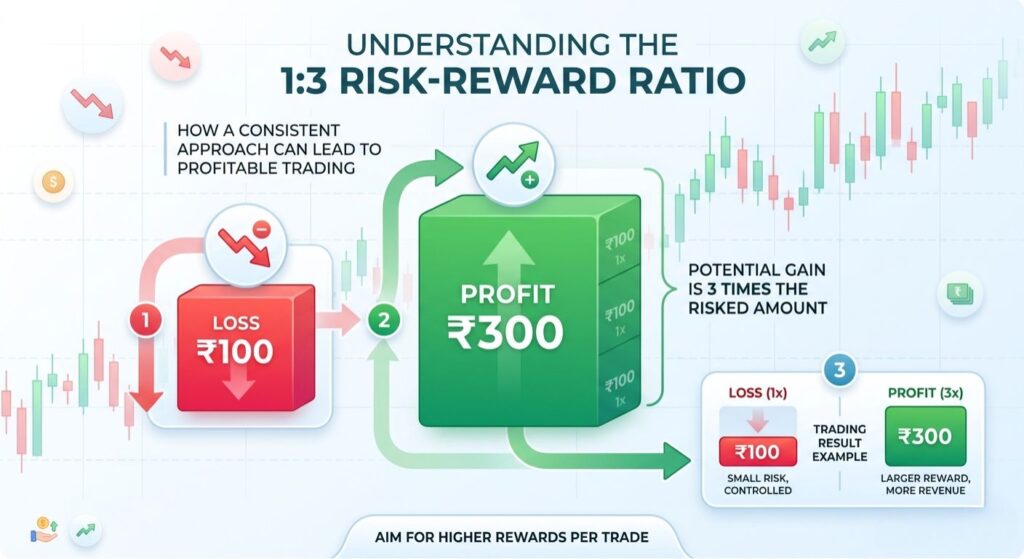
For example: If you risk ₹100 to make ₹300, your risk–reward ratio is 1:3.
Why Risk–Reward Ratio is Important
1. Helps in Better Decision Making
A good trader doesn’t enter trades randomly. By calculating the risk–reward ratio, you can decide whether a trade is worth taking or not.
Even if you lose some trades, a strong risk–reward strategy ensures you stay profitable in the long run.
2. Protects Your Capital
Capital protection is the first rule of trading. Without proper risk management, even a few bad trades can wipe out your account.
That’s why most professional traders follow strict rules like:
Never risk more than 1–2% per trade
Always define stop-loss before entering
These principles are usually taught in any good stock market course.
3. Improves Trading Discipline
Many beginners trade based on emotions like fear and greed. The risk–reward ratio forces you to think logically and follow a structured plan.
If you are planning to join a trading institution near me, this is one of the first strategies you’ll learn to control emotional trading.
4. You Don’t Need to Win Every Trade
Here’s something surprising:
You can be profitable even if you win only 40% of your trades—if your risk–reward ratio is strong.
For example:
Lose ₹100 on 6 trades = ₹600 loss
Gain ₹300 on 4 trades = ₹1200 profit
Net profit = ₹600
This is why professionals focus more on risk management than just accuracy.
Ideal Risk–Reward Ratio
There is no fixed rule, but most traders prefer:
1:2 ratio (minimum)
1:3 ratio (ideal for beginners)
This means your reward should always be at least twice your risk.
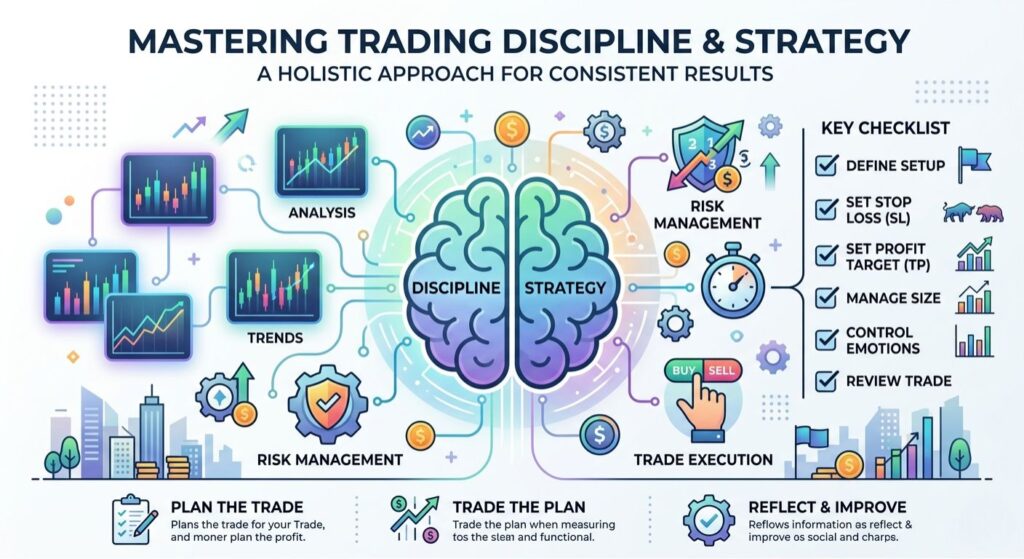
How to Apply Risk–Reward Ratio in Trading
Step 1: Identify Entry Point
Choose the price where you want to enter the trade.
Step 2: Set Stop-Loss
Decide the maximum loss you can take.
Step 3: Set Target
Define your profit target based on market analysis.
Step 4: Calculate Ratio
Make sure the reward is higher than the risk before entering.
Common Mistakes to Avoid
Ignoring stop-loss
Taking trades with poor risk–reward (like 1:1 or worse)
Overtrading without a strategy
Letting emotions override your plan
If you’re learning through a stock market course, these mistakes are usually covered with real examples.
Why Beginners Should Learn This Early
Many new traders lose money because they focus only on profits, not risk.
Joining a trading institution near me can help you:
Learn proper risk management
Practice with real-time examples
Build a disciplined trading mindset
Conclusion
The risk–reward ratio is not just a formula—it’s a mindset. It teaches you to think like a professional trader and focus on long-term success instead of short-term gains.
If you truly want to grow in trading, start by mastering this concept. Whether you learn through a stock market course or from a trading institution near me, make sure risk management is your top priority.
The information provided here is for general informational purposes only and should not be construed as financial advice. Investing in the stock market involves inherent risks, and there is no guarantee of profits or protection against losses. Before making any investment decisions, it is essential to conduct thorough research and seek advice from a qualified financial advisor or professional
WhatsApp us
Register now for free stock market seminar this tuesday