In the stock market, many people believe failure means losing money. But in reality, most traders don’t fail because they lack skill or intelligence. They fail because they quit trading at the wrong time—right before consistency begins.
Trading is not a straight path. Every trader goes through confusion, self-doubt, and drawdowns. The problem is not losses. The problem is misunderstanding the stock market learning curve.
This article explains why traders quit, why results feel worst before consistency, and how developing the right trader success mindset can change everything.
Failure vs Quitting in Trading
Failure and quitting are not the same.
Failure means giving effort without learning or improvement. Quitting means walking away before the learning compounds.
In trading:
Early losses are normal
Drawdowns are part of growth
Mistakes are feedback
Many traders quit not because they are incapable, but because they expect results faster than the market allows.
Understanding this difference is the first step toward trading consistency
The Painful Middle Phase of the Stock Market Learning Curve
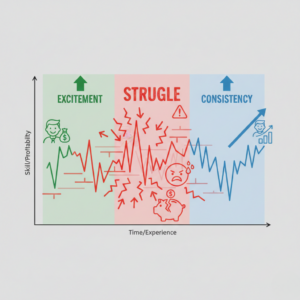
very trader experiences three phases:
1 The Excitement Phase
Beginners feel confident. Small profits create hope. Losses feel temporary.
2 The Painful Middle Phase
This is where most traders quit.
During this phase:
Losses increase
Confidence drops
Strategies feel inconsistent
Emotions take control
This phase is uncomfortable, but it is also where real learning begins.
3 The Consistency Phase
Only traders who survive the middle phase reach here. Discipline improves, mistakes reduce, and results stabilize.
Most traders quit in Phase 2, wrongly believing they have failed.
Why Trading Feels Hardest Before Consistency
A harsh truth of trading psychology is this:
Your understanding improves before your profits do.
You start recognizing mistakes:
Overtrading
Poor risk management
Emotional entries
But execution still lags behind knowledge. This gap creates frustration and leads to emotional decisions.
This is why many traders quit just before they develop consistency. The pain they feel is not failure—it is progress.
Emotional Quitting vs Skill-Based Decisions
Emotional Quitting
Emotional quitting happens when:
Losses feel personal
Fear controls decisions
Comparison increases
Patience disappears
This is the most common reason why traders quit.
Skill-Based Pausing
Professional traders pause to:
Review performance
Reduce risk
Improve discipline
They don’t quit the market—they reset their approach.
Successful trading requires emotional control more than prediction skills.
Why Indian Traders Struggle More With Quitting
Trading education in India comes with unique challenges:
Family pressure
Fear of capital loss
Social expectations
Limited risk tolerance
Many Indian traders trade with emotionally sensitive capital. This leads to:
Avoiding stop-loss
Holding losing trades
Overtrading to recover losses
Understanding this cultural pressure is essential for building a long-term trading mindset in India.
How Mentorship Improves Trading Consistency
Most traders who quit were actually one correction away from improvement.
Mentorship helps by:
Normalizing losses
Correcting emotional mistakes
Enforcing discipline
Speeding up the learning curve
This is why traders with guidance reach consistency faster than those learning alone.
Mentorship doesn’t remove losses—it helps traders survive long enough to learn from them.
Consistency Is Built, Not Found
Many traders search endlessly for the perfect strategy. But consistency doesn’t come from strategies alone.
It comes from:
Risk management
Emotional discipline
Repetition of rules
Acceptance of losses
The market rewards stability, not excitement.
Final Thoughts: You Are Closer Than You Think
If you are struggling, feeling stuck, or thinking of quitting, remember this:
Most traders don’t fail — they quit at the wrong time.
Trading rewards patience, discipline, and those who stay committed through discomfort. If you focus on process over profits, consistency becomes inevitable.
Success in trading is not about speed. It’s about staying long enough to grow
The information provided here is for general informational purposes only and should not be construed as financial advice. Investing in the stock market involves inherent risks, and there is no guarantee of profits or protection against losses. Before making any investment decisions, it is essential to conduct thorough research and seek advice from a qualified financial advisor or professional.
WhatsApp us
Register now for free stock market seminar this tuesday