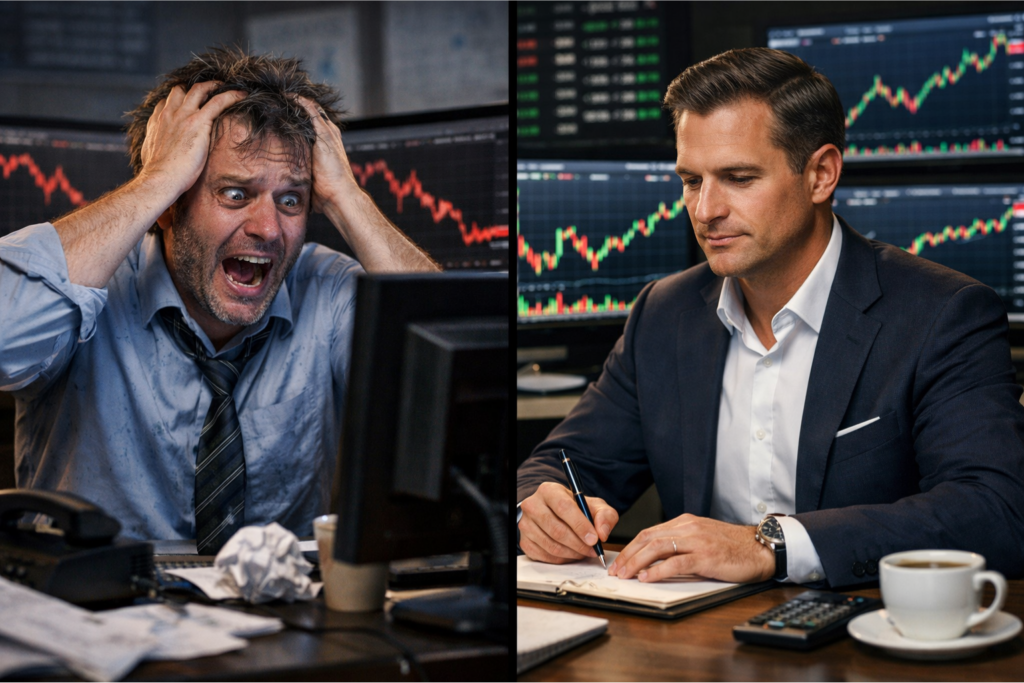
What 90% of Beginner Traders Learn Only After Losing Money
Most people enter the stock market with excitement, confidence, and big dreams. Charts look simple, strategies feel logical, and success stories are everywhere on social media. But for most beginners, the real lessons don’t come from books, courses, or webinars
They come after losing money.
This isn’t because beginners are careless or lazy. It’s because the stock market teaches lessons that can only be understood through real experience. In fact, nearly 90% of new traders realize the same hard truths only after facing losses.
This article breaks down those lessons — not to scare you, but to prepare you
1. Knowledge Alone Doesn’t Make You Profitable
Most beginners believe that once they learn indicators, patterns, or strategies, profits will follow automatically. Reality hits hard when trades still go wrong.
The truth is:
Many traders know what to do
Very few can execute it consistently
Profitability is less about information and more about discipline, patience, and emotional control. This lesson usually becomes clear only after repeated mistakes.
2. Losses Are Part of the Game, Not a Personal Failure
Early losses feel personal. Beginners often think:
I’m bad at trading
The strategy doesn’t work
The market is against me
Over time, traders learn that losses are a business expense. Even professional traders have losing days, weeks, and sometimes months. What matters is how well losses are controlled.
This mindset shift usually comes only after experiencing pain in real trades.
3. Risk Management Is More Important Than Entry
Beginners spend hours finding the perfect entry. Experienced traders spend time controlling risk.
After losing money, traders realize:
One bad trade can wipe out multiple good ones
Position sizing matters more than predictions
Capital protection comes before profit
Risk management is boring — until you ignore it and pay the price
4. Emotions Are the Biggest Enemy
Fear, greed, hope, and revenge trading don’t show up in demo accounts. They appear only when real money is on the line.
Common emotional mistakes include:
Holding losses hoping they recover
Exiting winners too early
Overtrading after a loss
Most beginners underestimate emotional pressure. Losses teach them that trading is more psychological than technical
5. Consistency Beats Big Profits
Many beginners aim for big, fast profits. After losing money, priorities change.
Following rules sounds easy — until emotions interfere.
After losses, traders realize:
Rules are useless if not followed
One impulsive trade can break a good system
Discipline takes time to build
This lesson can’t be taught. It must be experienced.
8. Trading Is a Long-Term Skill
Beginners often expect quick results. Losses teach patience.
Trading is:
A skill built over time
A process of learning, failing, adjusting
More like a profession than a shortcut
Those who survive understand that growth happens slowly.
9. Not All Advice Should Be Followed
After losing money by blindly following tips, beginners learn to:
Question advice
Test ideas themselves
Build independent thinking
The market rewards responsibility, not dependency.
10. The Real Goal Is Survival, Not Profit
The biggest lesson beginners learn after losses is simple: If you survive long enough, you get a chance to succeed.
Blowing accounts ends the journey. Protecting capital keeps you in the game.
Final Thoughts
Most beginner traders don’t fail because they lack intelligence. They fail because the market demands emotional strength, patience, and discipline — qualities that only develop through experience.
Losses are painful, but they are also powerful teachers.
If you are willing to learn from them, the market slowly starts making sense.
The goal isn’t to avoid losses completely.
The goal is to learn fast, protect capital, and keep going.
The information provided here is for general informational purposes only and should not be construed as financial advice. Investing in the stock market involves inherent risks, and there is no guarantee of profits or protection against losses. Before making any investment decisions, it is essential to conduct thorough research and seek advice from a qualified financial advisor or professional
WhatsApp us
Register now for free stock market seminar this tuesday