
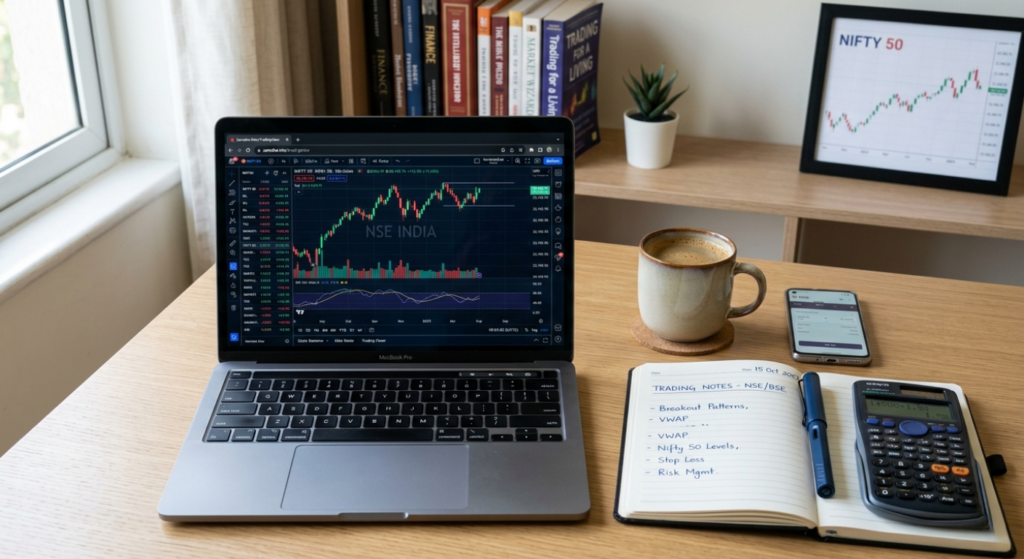
Choosing the right stock market course in India can make a huge difference in your trading journey. A good stock market course in India will help you understand market basics and strategies The popularity of stock market trading in India has increased rapidly in recent years. Many people want to learn trading and investing, but the biggest confusion they face is choosing the right stock market course. Today, there are hundreds of online and offline courses available, and not all of them are genuine or useful.
Choosing the wrong course can waste your time, money, and confidence. So, before enrolling in any program, it is important to know what to look for. In this blog, we will discuss the most important factors to help you choose the right stock market course in India
1. Define Your Learning Goal
The first step is to understand why you want to learn the stock market. Everyone has different goals. Some people want to invest for long-term wealth. Others want to become traders. Some are looking for career opportunities in finance.
If your goal is long-term investing, you should focus on fundamental analysis and portfolio building. If you want to do intraday or swing trading, you should look for technical analysis and risk management. When your goal is clear, it becomes easier to select the right course.
Experts also recommend writing down your purpose before choosing a course because it helps you filter out irrelevant programs
2. Choose Based on Your Experience Level
Not all courses are designed for beginners. Some are advanced and may confuse you if you do not have basic knowledge.
Beginner
If you are new, look for courses that cover:
- Stock market basics
- How exchanges work
- Types of financial instruments
- Risk management
- How to open and use a trading account
Intermediate
If you already know the basics, focus on:
- Technical analysis
- Chart reading
- Indicators and strategies
- Trading psychology
Advanced
Advanced traders should learn:
- Options strategies
- Algorithmic trading
- Portfolio management
Many structured programs start from basics and gradually move to advanced concepts, which is ideal for long-term learning.
3. Check the Course Curriculum Carefully
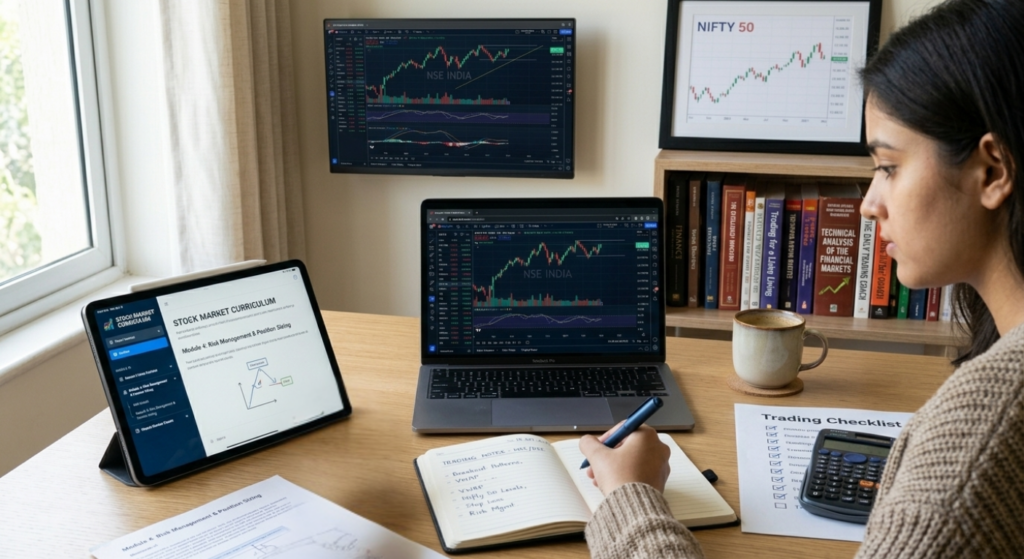
Before enrolling, compare different options for a stock market course in India and check reviews, curriculum, and trainer experience , This is one of the most important steps. A good stock market course should be practical, not just theoretical. Before enrolling, review the syllabus.
A strong course must include:
- Technical and fundamental analysis
- Risk and money management
- Trading psychology
- Live market examples
- Case studies
- Real trading simulations
Courses that provide assignments, quizzes, and backtesting exercises are more effective because they help you apply what you learn.
Avoid courses that promise “guaranteed profits” or focus only on trading tips. Learning should be the main focus, not shortcuts
4. Verify the Trainer’s Credibility
Many beginners fall into the trap of fake mentors who only show screenshots of profits but do not provide real education.
Before joining any course:
- Check the trainer’s background
- Look for real market experience
- Read student reviews
- Watch free videos or demo sessions
- Avoid signal-based groups
Courses that focus on building skills instead of giving daily tips are more reliable and helpful in the long run
5. Free vs Paid Courses – Which Is Better?
Many beginners ask whether free or paid courses are better.
Free courses are useful in the beginning. They help you understand the basics and test your interest. However, they may lack structure, mentorship, and live support.
Paid courses usually provide:
- Structured learning
- Live classes
- Mentorship
- Certification
- Doubt clearing
- Practical training
The best approach is to start with free learning and then upgrade to paid courses when you need deeper knowledge
6. Look for Practical Exposure
The stock market is a practical skill. Theory alone cannot make you profitable. So, choose a course that offers:
- Paper trading
- Live trading sessions
- Real-time analysis
- Trading simulations
Practical exposure builds confidence and helps you understand how markets behave in different conditions
7. Language and Learning Style
India is a diverse country, and many learners prefer regional languages. Choose a course that matches your comfort level.
Some people learn better through:
- Video-based learning
- Live classes
- Offline training
- Recorded sessions
Make sure the course format suits your schedule, especially if you are a working professional
8. Mentorship and Post-Course Support
A good course should not end after the syllabus is completed. Continuous mentorship is very important.
Look for:
- Doubt-clearing sessions
- Community support
- Market discussions
- Strategy review
- Career guidance
Courses with strong mentorship help you stay disciplined and avoid common beginner mistakes
9. Compare Fees and Value
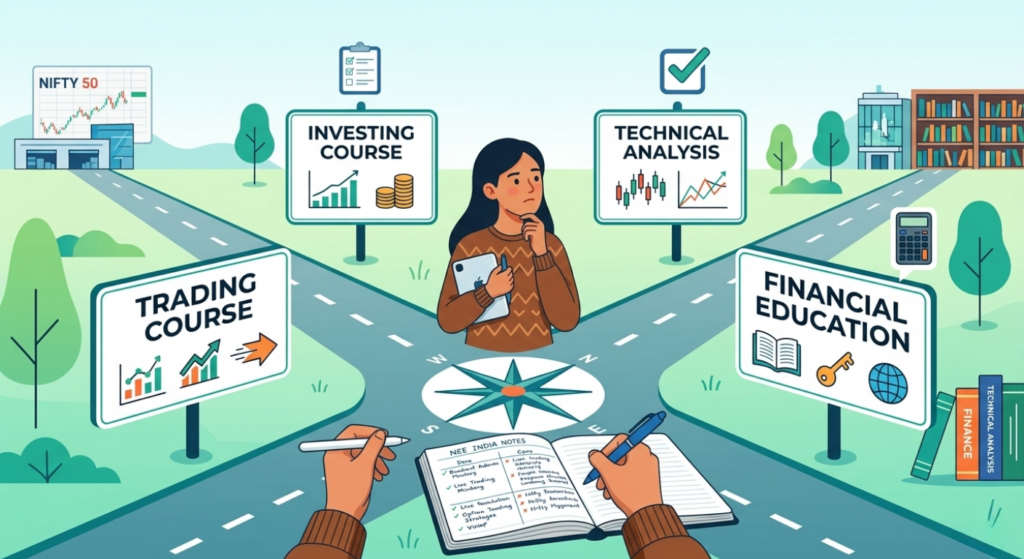
High fees do not always mean high quality. Compare different courses and check what they offer.
Focus on:
- Content depth
- Practical training
- Mentorship
- Duration
- Certification
- Placement support
Attend demo sessions before paying. This helps you understand the teaching quality and whether it matches your expectations
Conclusion
In conclusion, selecting the right stock market course in India is essential for building a strong foundation in trading , Choosing the right stock market course in India is a crucial step in your trading journey. The right education can save you years of struggle and financial losses. Instead of looking for shortcuts, focus on structured learning, practical exposure, and mentorship.
Remember, the stock market is not about quick profits. It is about developing skills, discipline, and patience. When you choose the right course and follow a proper learning path, you build confidence and increase your chances of long-term success.
Take your time, do proper research, and invest in your education before investing in the market
FOR A FREE STOCK MARKET SEMINAR VISIT HERE
CALLS @ 9986622277
Disclaimer
The information provided here is for general informational purposes only and should not be construed as financial advice. Investing in the stock market involves inherent risks, and there is no guarantee of profits or protection against losses. Before making any investment decisions, it is essential to conduct thorough research and seek advice from a qualified financial advisor or professional